Showing posts with label Best Film Editing. Show all posts

Tuesday, May 29, 2018

Gunfight at the O.K. Corral (1957)


Of all the riffs on this particular episode of American mythology, 1957’s big-budget Gunfight at the O.K. Corral is my favorite. Burt Lancaster is a stoic and statuesque as Wyatt Earp; Kirk Douglas does the heavy lifting as Doc Holiday. More often than not that’s how these things play out—producers bend over backwards to animate Earp, while Holiday, with his cards, his cough, and his Kate, rides into the sunset with the film tucked away in his breast pocket.

Gunfight is straight ahead, humorless, and not especially bothered about the opposite sex. Rhonda Fleming makes the expected Technicolor splash as a renowned lady gambler, but she’s not on screen long enough to be merit third billing. Her purpose is merely to oblige Lancaster to choose between a quiet future as her shopkeeper husband and the family honor—answering his brother’s call to destiny in dusty Tombstone. She won’t have him both ways and makes a hasty exit.

That leaves Jo Van Fleet as Kate Fisher, Holiday’s companion. We can tell that she loves him, but it’s a sans-affection, hate-hate relationship in Gunfight. Van Fleet sparkles as a Western femme fatale, stoking the rivalry between Holiday and Johnny Ringo as she vacillates between the two men, neither of whom actually seems to want her. Oh wait, I get it, it isn’t really about her. 

John Ireland turns in a clean-shaven Ringo, perfect for Eisenhower’s America. (Ireland played young Billy Clanton is 1946’s iteration, My Darling Clementine.) In fact, everyone here looks so coiffed and pretty that it can be difficult to tell the good guys from the bad. Perhaps that’s why professional villain caricature Lyle Bettger is Ike Clanton—there’s no mistaking him for a hero.

The climactic gunfight itself is surprisingly short on the bravado that has made this story so irresistible to filmmakers and audiences alike. Damn near every bullet is fired from cover, with combatants hiding in ditches and lurking behind wagons. The finale suffers from not having that expected moment where two enemies stand and face each other, whizzing bullets be damned. It finally winds down with an angst-filled Dennis Hopper cornered in a saloon, a cautionary episode imploring the delinquent teens of the 1950s to steer clear of wasted youth.

In the end, it’s star power (get a load of that poster) and Vistavision that puts this one over. Burt Lancaster and Kirk Douglas (who’s 101 years old and hitched 64 years as I write this—keep punchin’ champ) have a rare sort of chemistry that placed them opposite each other in seven films, each of which is somehow remarkable. Lancaster projects moral authority unlike any other actor of his generation (it’s easy to see why he earned an Oscar for upending that in Elmer Gantry) while Douglas’s screen persona is somehow able to flout Lancaster’s gravity and humanize him. Along with John Sturges’s capable direction and the panoramas we expect from a mid-century western, this is well worth your time.

Gunfight at the O.K. Corral (1957)
Grade: B+
Directed by John Sturges
Starring Burt Lancaster, Kirk Douglas, Rhonda Fleming, Jo Van Fleet, John Ireland, Lyle Bettger, DeForest Kelley, Dennis Hopper, Ted DiCorsia.
Written by Leon Uris
Released by Paramount Pictures
Running time: 122 minutes
Availability: Airs on TCM, widely available. 

Thursday, September 22, 2011

Janie (1944)


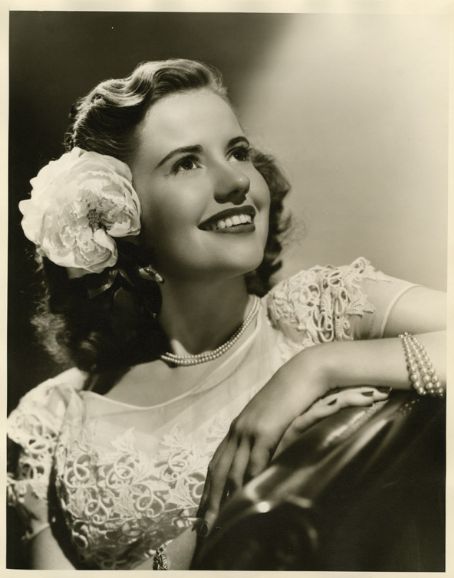
Janie is a charming wartime domestic comedy released by Warner Bros. at the height of the post-Normandy push in the autumn of 1944. After a successful run on Broadway, Jack Warner secured the project and assigned Michael Curtiz to direct newcomer Joyce Reynolds in the title role. Essentially an ensemble piece, it boasts a strong Hollywood cast (not a single Broadway holdover) featuring Robert Hutton, Edward Arnold, Ann Harding, Alan Hale, and Hattie McDaniel in key roles. Judging by the poster, the studio clearly marketed the film on the strength of the stage production, and as an effort to make a star out of the nineteen year-old Reynolds.

Here’s it is in a sentence or two: Janie Conway (Reynolds) is a small town girl whose hormones kick into overdrive when the army moves into her hometown of Hortonville, much to the consternation of her overbearing father (Arnold), who runs the local newspaper. Pretty soon Janie is juggling a newfound army beau (Hutton) and her high school sweetheart, both of whom want to knock the other’s block off. Everything wraps up Risky Business style, when the Janie and her girlfriends throw a big party for all the under-twenties from the army base at the Conway house.

In spite of the fact that this is a low-budget film targeted at teens, it has a great script and a particularly strong narrative construction, with numerous subplots that all wrap up nicely at the end. It embraces teen culture during, the generation gap, frustration with the bureaucracy of the war years, young love, old love, the marriage boom, self-sacrifice, and so forth — but manages to handle all of its subject matter with a good sense of humor. Curtiz’s direction is highly accomplished: he wrestles good performances from his young cast members, and allows the veterans to do their thing; the whole thing moves at breakneck speed, but the pacing of the comedic moments is perfectly handled and the film never loses its light touch — especially important in 1944.


With that in mind, it’s also important to note that while Janie has its sentimental, patriotic moments, it never feels heavy-handed or too much like rah-rah propaganda. Instead, the movie takes a more subtle approach, presenting a picture of the kind of idealized American family and Rockwellian small town life that the country’s young soldiers were supposed to be fighting for — whether it existed only on a Hollywood sound stage or not. It goes without saying that the characters are unrealistic — all the girls are pure as the driven snow, while the boys from the base couldn’t be more well mannered. Most of this will be irrelevant to viewers looking for a pleasantly diverting comedy film, which Janie certainly is — even more so than other, better known films. This thing qualifies as a forgotten gem.

Reynolds looks so much like Deanna Durbin that they could be sisters, and the whole movie has the feeling of a Durbin project. There’s even a musical number that happens during the party sequence, when all of the young people sing an impromptu rendition of Jules Styne and Sammy Cahn’s Keep Your Powder Dry (one year later the title of a Lana Turner picture). It’s an extended sequence that really swings; but while for me it was a highlight, the way in which everyone in the party takes a turn at the lyrics might damage the film’s sense of continuity for some viewers. And while Janie was a long-sought-after viewing for me (this is the only Academy Award nominee in the film editing category that I hadn’t seen), other who happen upon the movie are almost certain to enjoy it. It was successful enough that WB produced a 1946 sequel with Joan Leslie in the Reynolds part. Reynolds herself would only make three more films after Janie, two of them opposite Hutton, and would leave the business in 1950.  

Janie (1944)
Directed by Michael Curtiz
Starring Joyce Reynolds, Robert Hutton, Edward Arnold, and Ann Harding
Running time: 102 minutes
Released by Warner Bros. 

Friday, September 24, 2010

Pal Joey (1957)

Damn you, Kim Novak, why can't I make up my mind about you? If ever there was a woman — an astonishingly beautiful woman at that — who photographed better than she filmed it was Kim Novak. There are photographs of Kim that stagger the mind, that grab you and force you to admit that this was one of the world's great faces. Those eyes framed with the too-thick painted on brows, lips always parted, and the platinum hair swept back from her face — If Monroe's approachable sexuality begged the photographer to step back and take her all in, Novak's did just the opposite, asking us to look closer, to zoom in, to try to unravel the mystery. It was a quality almost entirely lost in motion pictures — only Hitchcock truly understood how to use her.

Her first name was (I mean, is … Kim is still with us) Marilyn, but that couldn't be used for obvious reasons, so Columbia boss Harry Cohn landed on Kim. The studio brought her along slowly with the idea that eventually she'd replace Rita Hayworth as Columbia's resident "Queen of the Lot." Pal Joey, which is one of those movies that has backstories related to everything from the source material to each of the stars was meant to be the moment where Rita more or less passes the torch to the younger star. And while that seems to take place, the movie rests firmly on the narrow shoulders of Frank Sinatra.

I don't like Kim here. Pal Joey was her second film with Frank Sinatra after their success three years earlier in The Man with the Golden Arm. The role is simply too straight, and calls for an actress with more a more deft comedic touch than Novak had at that time, or ever. It's easy to criticize Hayworth as an actress, but, had she been younger she would have hit a home run in Novak's role. Kim is simply too much woman for the diminutive Sinatra, too sultry for her good-girl character, and she looks uncomfortable in almost every scene. Her very next film would be her most famous, and it's easy to understand what doesn't work about her and Frank together in Pal Joey by looking at what does work between her and James Stewart in Vertigo. The Hitchcockian restraint, the mystery, the elegance, and even the leading man suit her better.

Sinatra lovers rejoice, he's at the top of his game. (I know, you've seen this many times already.) And I don't mean as an actor, or as somebody hitting his marks and speaking the lines — it always seems to me that Sinatra mailed it in in that regard. I'm thinking of the musical numbers, especially the ones in which he appears on the nightclub stage. The guy really comes to life under the hot lights. He works the audience and looks like a man who knows what he's doing and loves it. Of all Sinatra's pictures I think this one gives the best impression of how he must have appeared on stage in one of his Vegas shows — albeit in a much smaller way. Watch Pal Joey and think swagger, without the bullshit rat packers hanging on his pant legs.

There's a melancholy feeling that one gets watching Rita Hayworth in this film. Although out of respect Sinatra conceded top billing to her, she has the smallest and least affable part of the three leads. She's the older woman — a gold digger who scored to boot — who plays sugar daddy to Sinatra's dream of owning his own club and consequently keeps him away from Novak, the girl he really belongs with. Rita loses out in the end, but she does it with class. There's one great moment early on when we are reminded of her signature number in Gilda, but it's fleeting. Instead we are left with the impression that this is an actress getting put out to pasture, and there's something in the pursing of her lips that lets us know she doesn't quite like it. She's as beautiful and talented as ever, but Hollywood was even more fickle in those days than it is now and the parts just weren't made with her in mind anymore. Like Kim, Rita's next film was a heavyweight, though admittedly Separate Tables is an ensemble film, and Rita would never again appear in a production of this magnitude.

Pal Joey doesn't add up to the sum of its parts, but it's an enjoyable musical and something of a minor essential.


Pal Joey (1957)
Grade B
Directed by George Sidney
Starring Rita Hayworth, Frank Sinatra, and Kim Novak
Released by Columbia Pictures
Running time: 111 minutes
Availabilty: Widely on DVD.